Spending More to Get Less: The Uncomfortable Truth About Premium Antivirus
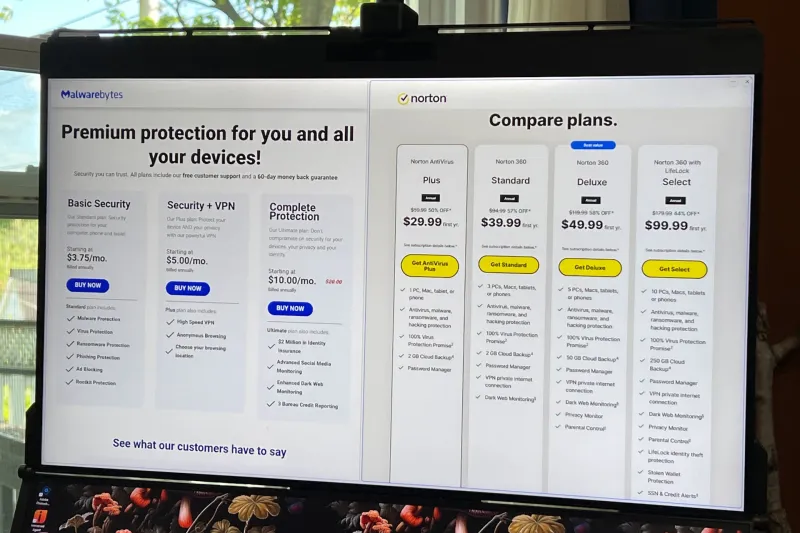
Photo: antivirus software price comparison security protection concept, via www.digitaltrends.com
There's a deal most Americans instinctively believe in: you get what you pay for. Pay more, get more. It's practically baked into the culture. So when your antivirus vendor dangles a "Premium" or "Total Protection" tier in front of you for $60, $80, even $100 a year, the assumption is that you're buying a meaningfully better product. Better detection. Fewer threats slipping through. A safer machine.
Except the data keeps suggesting that's not always true — and in some cases, the opposite is closer to reality.
The Benchmark Problem Nobody Wants to Advertise
Every year, independent testing labs like AV-TEST and AV-Comparatives run rigorous head-to-head evaluations of antivirus software. They throw thousands of real-world malware samples at these products and measure how many get caught. The results get published. The vendors whose products score well put out press releases. The ones who don't, quietly move on.
What's interesting — and what rarely makes it into those press releases — is where free products keep showing up in the rankings. Microsoft Defender, which ships free with every Windows 10 and 11 machine in the country, has consistently scored at or near the top of independent detection rate charts. In AV-TEST's 2023 consumer evaluations, Defender matched or beat several paid competitors on protection scores. Avast Free, Bitdefender Free, and Kaspersky Free have all put in similarly strong showings against products that cost real money.
That's not a one-time anomaly. It's a pattern that's been building for years, and it raises an uncomfortable question: what exactly are people paying for?
How Freemium Broke the Industry's Incentive Structure
To understand why this is happening, you have to understand how the freemium model actually works inside these companies.
The free tier isn't charity. It's a funnel. The goal is to get millions of users onto the platform, collect telemetry — that's data about what threats are circulating in the wild — and use that massive installed base as a detection network. More users means more threat intelligence. More threat intelligence means better detection. The free product, paradoxically, often benefits directly from its own scale in ways the paid tier doesn't automatically improve upon.
Meanwhile, the paid tier is where the business pressure lives. That's the product with a marketing budget, a sales team, a renewal campaign, and a customer success department. Vendors need to justify the upgrade. So they load the premium SKU with features: VPNs, password managers, parental controls, identity theft monitoring, dark web scanning, secure browsers, tune-up utilities, and about fifteen other things that have varying degrees of relevance to actually stopping malware.
The result is a product that's heavier, more complex, and — critically — not necessarily better at the core job. You're not always paying for better detection. You're paying for a bundle.
Resource Consumption: The Hidden Cost of "More"
This is where premium antivirus starts actively working against you, and it's something the community here at NoDAVG has been tracking for a while.
Independent performance benchmarks consistently show that heavier, feature-laden security suites consume significantly more CPU and RAM during scans than leaner free products. AV-Comparatives' performance impact tests have flagged several premium suites as meaningful drags on system performance — slowing down file copies, browser launches, and application installs in ways that free-tier competitors don't.
For someone running a mid-range laptop — which describes a huge chunk of American households — that overhead is tangible. A security product that slows your machine down isn't just annoying. It changes user behavior. People start dismissing scan notifications. They postpone updates. They disable features. A security tool you're working around is a security tool that isn't protecting you.
The False Positive Factor
Then there's the false positive problem, which is genuinely underreported in mainstream tech coverage.
A false positive is when your antivirus flags a legitimate file as malicious. It sounds like a minor inconvenience, but it isn't. False positives quarantine or delete files you actually need. They break software installations. They create alert fatigue — the security equivalent of a car alarm going off so often that the whole neighborhood stops looking up.
Here's the kicker: premium products don't automatically have lower false positive rates. In several AV-TEST evaluation cycles, free products from major vendors scored comparably or better on false positive rates than their paid counterparts. The added detection aggression that vendors sometimes tune into premium tiers to justify the price can actually push false positive rates up.
You end up with a product that's crying wolf more often, consuming more resources, and not meaningfully catching more of the real threats.
Where the Marketing Budget Goes
Spend an afternoon watching cable news or scrolling through a sports website, and you'll catch antivirus ads. These companies spend serious money on visibility. Norton, McAfee, and others have run national TV campaigns, sponsored major events, and built affiliate marketing programs that pay publishers handsomely for every subscription they drive.
That money has to come from somewhere. And when a company's growth strategy is built on subscription renewals and upsell conversions rather than on outperforming competitors in detection benchmarks, the R&D budget starts to reflect those priorities. Building a better heuristic engine is expensive and slow. Licensing a VPN service and bundling it into your premium tier is fast and makes the feature list longer.
The security industry isn't unique in this dynamic — it's a version of what happens in a lot of mature software markets. But it's particularly troubling here because the stakes aren't "slightly worse spreadsheet software." The stakes are whether your financial data, your family's photos, and your work files survive contact with a ransomware payload.
What Actually Makes Sense for Most Users
None of this means every paid antivirus product is a rip-off or that free is always better. Context matters. Some premium products do offer genuinely useful additions — real human support, more sophisticated endpoint detection and response features, or enterprise-grade management consoles that make sense for small business owners.
But for the average American household running Windows machines? The honest answer, backed by the data, is that Microsoft Defender combined with good security hygiene — keeping Windows updated, using a password manager, not clicking sketchy links — provides a baseline that paid suites frequently fail to meaningfully improve on.
If you're going to spend money on security, consider where it actually moves the needle. A reputable password manager subscription. A hardware security key for your most sensitive accounts. A monitored home network solution. These tend to address the actual attack vectors that are compromising real people's systems right now.
The antivirus industry built its business model on fear and the intuition that more expensive equals more protected. The independent test data has been quietly challenging that assumption for years. It's time more people started paying attention to the numbers instead of the marketing.
Have a take on this? Drop it in the community forums. We want to hear which tools you've actually tested and what the results looked like on your own hardware.